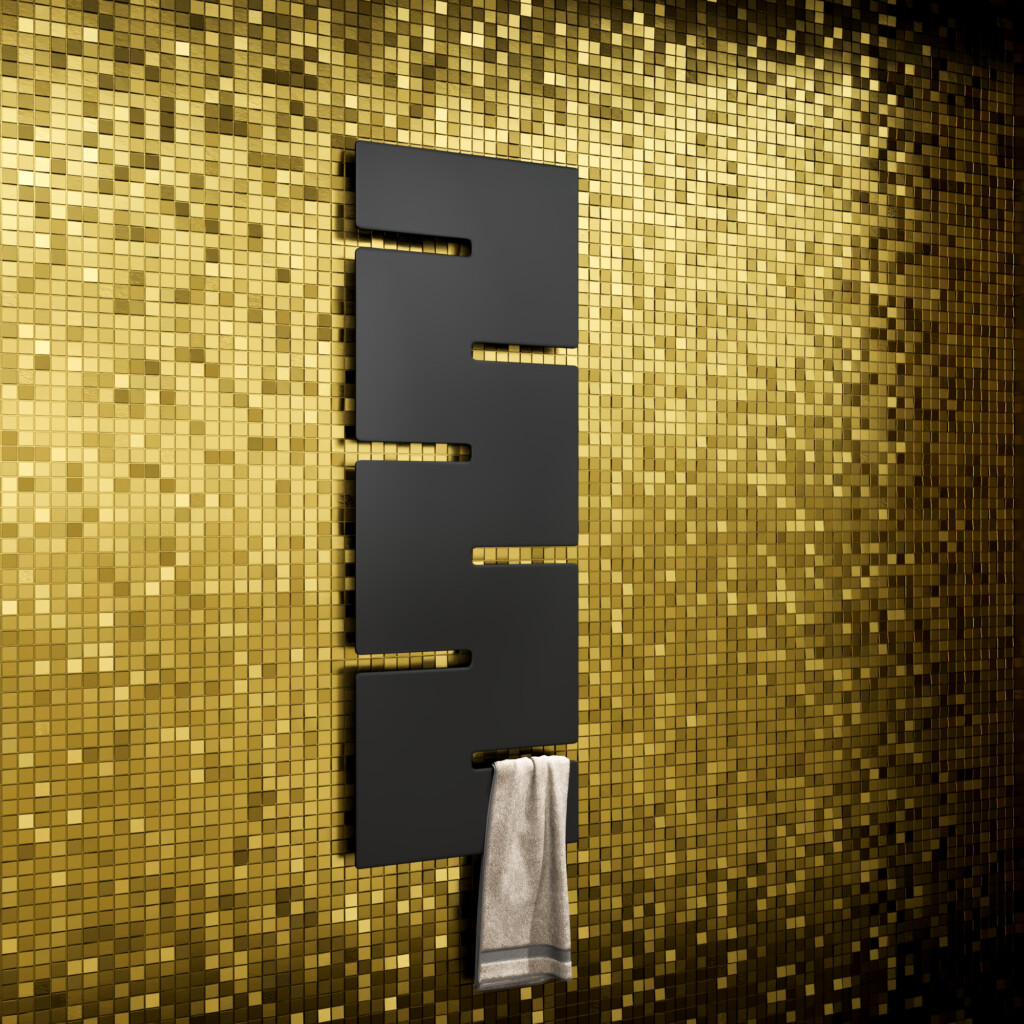
What you need to know about towel rails

Technical specifications

CharacteristicsValue
Materialaluminum
Flush mounting optionyes
Thickness of towel rail10 mm
Distance from the wall50 mm
Power consumption (depending on size)60-180 W
Thermostatat your choice
Product surface temperaturemax 55 0C
Uniform heatingof the entire towel rail
Mains voltage220V
Protectionoverheating / childproof
Warranty10 years

Thermal conductivity

MaterialThermal conductivity
Aluminum220 W / (m – K)
Brass100 W / (m – K)
Steel47 W / (m – K)
Water0,6 W / (m – K)
Petroleum oils0,12 W / (m – K)
Ceramics0,5 – 0,9 W / (m – K)

Modern towel rails are completely different from those that were about 10-15 years ago. Progress, development is subject to everything – whether it is a car, relationships or home heating technology. And the person, who on average renewed the bathroom a few years ago, and now again faced with the question of choosing a towel dryer, sometimes it is not easy to understand the mass of different proposals.

So:
  • water
  • electric with TEN
  • electric with dry heating element
  • combined
such variants of towel dryers offers the market today.
How to make the right purchase for years to come? At the lowest cost and maximum benefit? With the least maintenance and the greatest efficiency? Buy – install – forget the hassle and enjoy. According to current trends, a heating device should have a high heat output with low energy consumption. This means that the thermal conductivity of the product comes first. In other words, anything can be heated, but the question is how much will it cost us?

Electric with dry flexible heating element

No fluid inside – will never leak. There is no need to buy anything extra. Fully corresponds to the image on the photo. The heating temperature is high (up to 55-60’C) and is the same over the whole area of the towel dryer. Economical. Power consumption is on average about 100 W/h, depending on the size of the towel dryer, which is equal to an incandescent light bulb. In simple words, using the design-radiator with a dry heating element you for 5 years will pay for electricity as much as for 1 year with a towel dryer with THEN.
A classic that just got used to over the decades….. The heat carrier is water + steel. Heat conductivity coefficient leaves much to be desired: water – 0,6 W/(m-K); steel – 47 W/(m-K). For installation it is necessary to buy additionally taps (often their cost is 50 % of the price of the towel dryer itself), to provide a bypass – a bypass way of a pipe, allowing to remove the radiator in winter period. And also it should be remembered that it will please you with warmth only in the heating season. Let’s assume that all this is satisfactory, and the installation work has been done. And now let’s imagine that in the system of multistory buildings stray currents, or in a private house is not suitable composition of water, all these are causes of corrosion of metal (food stainless steel including), from which NO ONE is insured. Towel dryer simply begins to leak…. the manufacturer’s fault in it is not. Yes and stainless steel pipes themselves are already absolutely other thickness and quality … Cheapness of a water towel dryer is a misconception imposed on us for years.

Water

Electric with heating element

The same water towel dryer – heat carrier – water (oil, antifreeze) + steel, only additionally it is necessary to buy a heating element (often at sale managers do not specify it, and on a photo design-radiator, as a rule, is shown without it). After the time on TEN the scale forms, it is necessary to service it, the towel dryer can start to leak. At the same time initially TEN is a very expensive pleasure. It consumes a lot of electricity – in heating mode on average 500 W/h, the principle of work, as at the boiler, only the heat is distributed unevenly (at the bottom of the towel dryer the temperature is much higher, as there is no circulation of liquid). In short – it’s just a pipe with water, with very low heat output, devouring electricity. The day before yesterday. Approximately like an old URAL car with consumption of 100l/100 km, only with a more modern and attractive cabin for the driver, but with the same engine.

This is a combined version of water and electric towel dryer with TEN. Characteristics are the same. You will have to buy all of the above. After installation with taps, yes with TEN will be significantly different from the picture on the seller’s site.

Combined

The main advantage of towel warmers with dry heating element inside is the possibility of concealed installation to the electrical wiring. Such design radiator is absolutely invisibly connected to the power source and looks simply as an element of room decoration.

Aluminum electric towel dryers

Requires a minimum of electricity for fast and even heating. Such design radiators will handle drying towels and heating a room at any time of the year in no time. Today, all modern heating radiators (batteries) are made with a minimum of liquid and a maximum of material that gives off heat. Towel dryers RadiatorSystem completely correspond to this technology. They are liquid-free. Carbon and nichrome is used as a heater, and pure aluminum is used as a heat conductor. Nothing extra. Have a huge usable area compared to tubular design radiators. Equipped with thermostats, any model of which provides for concealed installation to the electrical wiring.
We have stated our thoughts based on many years of experience. The conclusions are yours to draw. Happy shopping!